
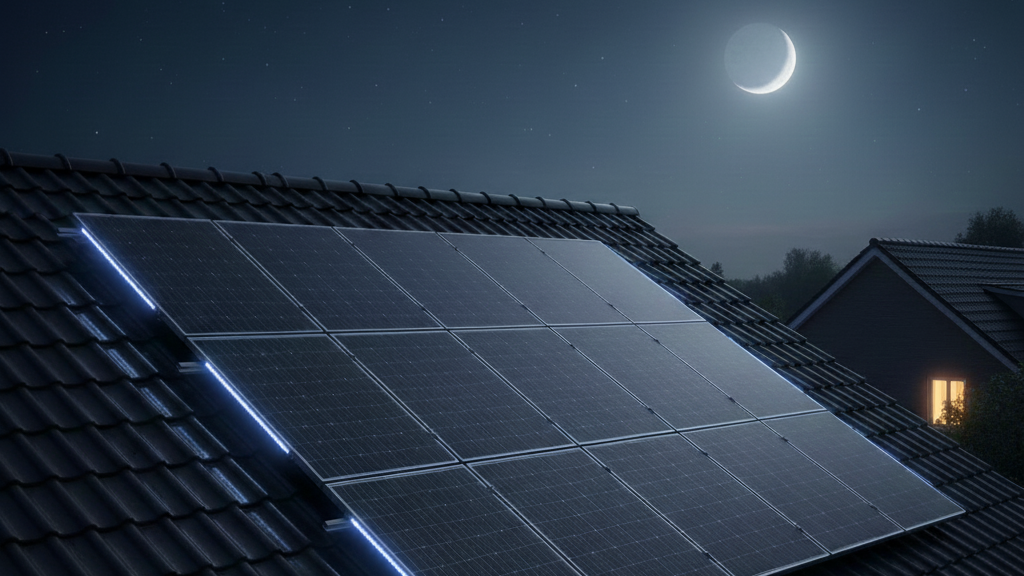

Solar Panels at Night: How Solar Power Systems Function at Night
One of the most common questions people ask before installing solar is: do solar panels work at night? Since most households use electricity after sunset, understanding how solar panels at night time behave is extremely important. Many people are unsure about what happens to solar panels at night, whether solar panels generate electricity at night, and why solar panels don’t work at night.
In this article, we explain everything clearly so you can make an informed solar decision without confusion.
Do Solar Panels Work at Night?
The simple and honest answer is no, solar panels do not work at night. Solar panels depend entirely on sunlight to generate electricity. Once the sun sets, there is no sunlight available, so power generation stops.
This leads many people to ask again, do solar panels work at night in any way? The answer remains no—but this does not mean your home will be without electricity. Modern solar systems are designed to support solar panels at night time through other solutions like grid power or battery storage.
Why Solar Panels Don’t Produce Electricity at Night
To fully understand why solar panels don’t work at night, it’s essential to grasp the science behind solar energy generation. Solar panels are built with photovoltaic (PV) cells, typically made from silicon, that harness energy from sunlight through a fascinating process called the photovoltaic effect.
The Science Behind Solar Energy Production
When sunlight hits a solar panel, photons (light particles) interact with the silicon cells. These photons energize electrons within the silicon material, causing them to break free from their atoms. This movement of freed electrons creates an electrical current that flows through the panel’s circuit, generating usable electricity for your home.
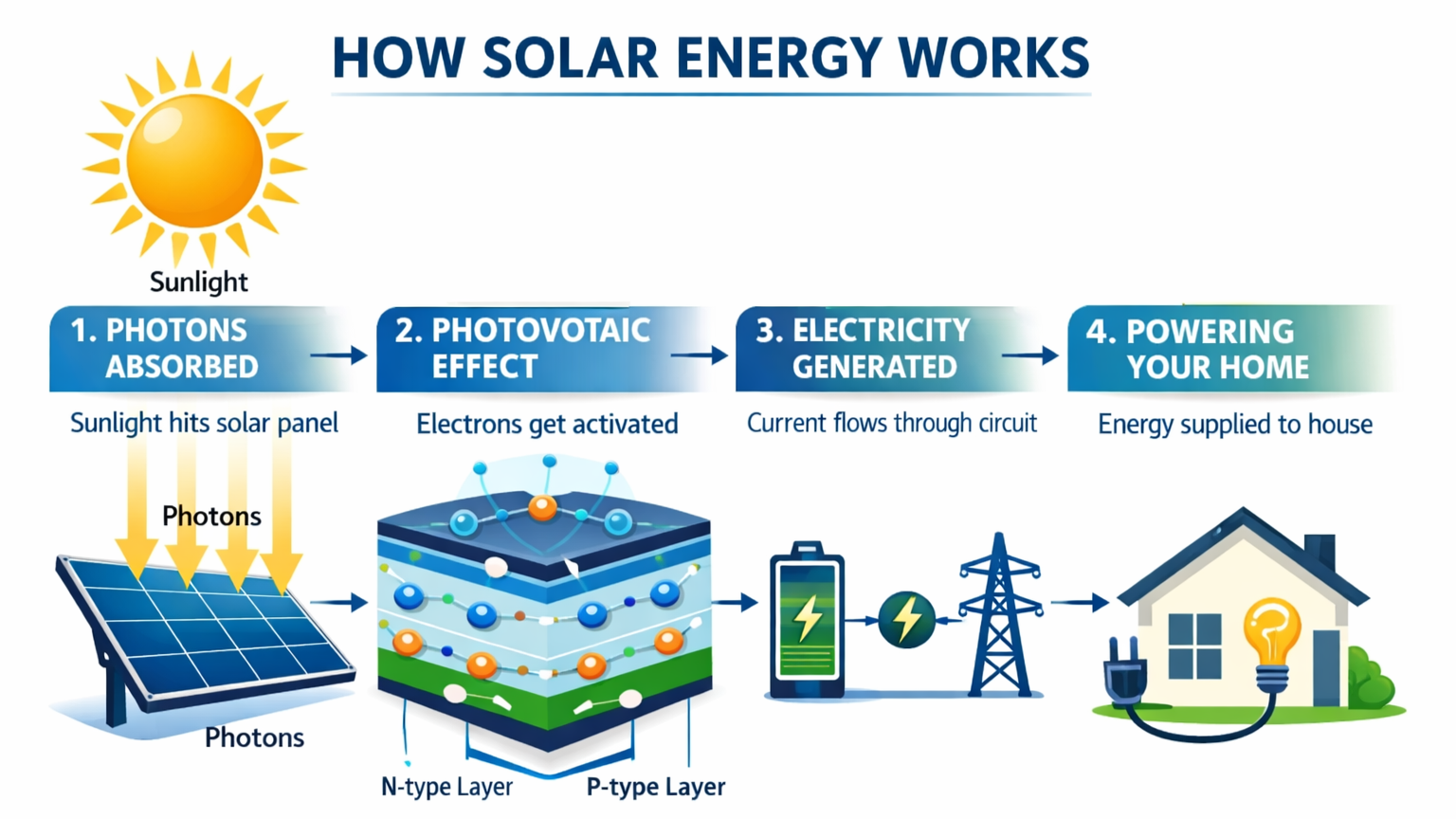
This entire process depends entirely on one critical factor: the presence of photons from sunlight. Without sunlight, there are no photons to energize the electrons, and consequently, no electrical current is produced.
So How Does Solar Power Work After Sunset?
At night, the absence of sunlight means the photovoltaic cells in your solar panels enter a dormant state. The silicon cells remain intact and undamaged, but they simply have no energy source to activate the photovoltaic effect. Think of it like a water wheel that needs flowing water to turn—without water, the wheel remains stationary, but it’s ready to work again once the water returns.
This is the fundamental reason why solar panels don’t work at night. It’s not a design flaw, manufacturing defect, or technological limitation that needs fixing. Rather, it’s an inherent characteristic of how solar energy conversion works. Solar panels are specifically engineered to capture and convert sunlight, and they perform this function exceptionally well during daylight hours.
Daytime Efficiency vs. Night time Inactivity
During peak sunlight hours—typically between 10 AM and 3 PM—solar panels operate at maximum efficiency, converting sunlight into electricity at rates of 15-22% depending on the panel quality and type. Modern panels are highly effective at capturing even indirect or diffused sunlight on cloudy days, though at reduced capacity.
However, once the sun sets, panels produce zero electricity until sunrise. They don’t drain power, cause problems, or require any intervention—they simply wait inactive until photons from sunlight are available again. This predictable pattern is actually advantageous because it allows homeowners to plan their energy storage and usage strategies accordingly.
What About Other Light Sources?
Some people wonder if artificial lighting or moonlight can power solar panels at night. Technically, extremely minimal amounts of electricity can be generated from these sources, but the output is so negligible—often less than 0.01% of daytime production—that it has no practical value. Moonlight, for instance, is simply reflected sunlight and is approximately 400,000 times less intense than direct sunlight, making it essentially useless for meaningful power generation.
Understanding why solar panels don’t work at night helps homeowners make informed decisions about energy storage solutions and grid connectivity, ensuring uninterrupted power supply around the clock.
What Happens to Solar Panels at Night?
Many homeowners worry about what happens to solar panels at night and whether they shut down completely, get damaged, or require any special maintenance during darkness. These concerns are understandable, especially for those new to solar energy, but the reality is reassuring.
Here’s what actually happens when the sun goes down:
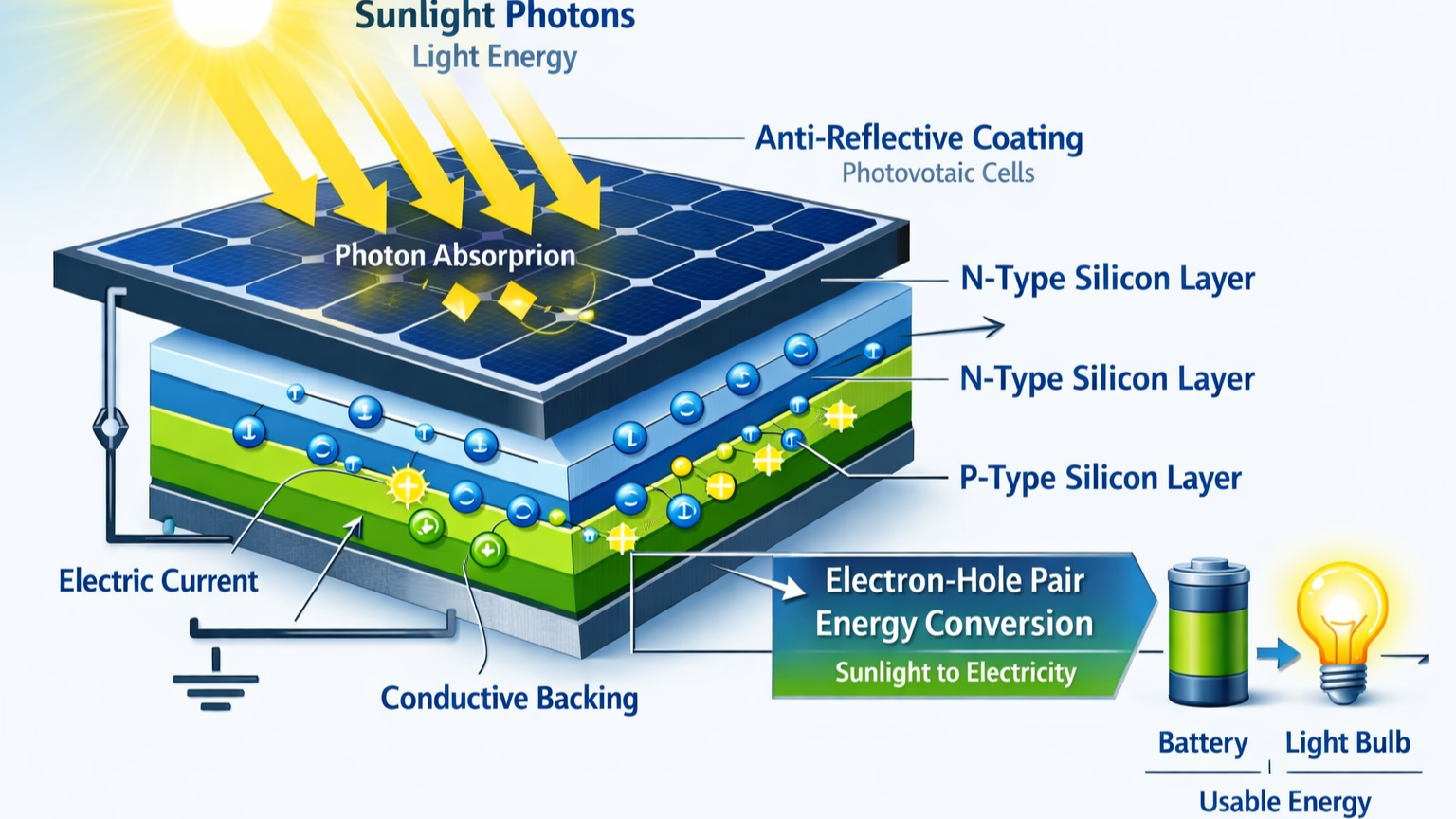
Solar Panels Stop Producing Electricity
Once darkness falls and sunlight is no longer available, your solar panels immediately cease electricity generation. This transition happens automatically—there are no switches to flip or settings to adjust. The photovoltaic cells simply stop converting light energy because there’s no light to convert. This shutdown is instantaneous and occurs naturally as daylight fades during sunset.
The Panels Remain Safely Installed and Inactive
During night time hours, solar panels enter a dormant state but remain perfectly safe and secure on your roof. They don’t draw power from your home, leak electricity, or create any safety hazards. The panels sit quietly, maintaining their structural integrity while exposed to nighttime temperatures and weather conditions. Modern solar panels are designed to withstand temperature fluctuations, so the cooling that occurs after sunset actually poses no risk to the equipment.
They Automatically Restart Generation When Sunlight Returns
As dawn breaks and the first rays of sunlight touch your panels, they immediately begin producing electricity again—no manual intervention required. This automatic restart happens seamlessly every morning. The photovoltaic cells respond to even low levels of early morning light, gradually increasing production as the sun rises higher in the sky. By mid-morning, your panels are back to generating power at optimal levels.
No Wear, Tear, or Damage Occurs
What happens to solar panels at night is completely normal and part of their designed operational cycle. This daily on-off pattern doesn’t cause wear and tear on the panels. Unlike mechanical systems with moving parts that degrade with repeated use, solar panels have no moving components. The silicon cells don’t wear out from starting and stopping, and the electrical connections remain stable throughout these cycles.
Your Home’s Power Supply Continues Uninterrupted
While your panels rest at night, your home doesn’t lose power. If you have a grid-connected system, electricity automatically flows from the utility grid to power your lights, appliances, and devices. If you’ve invested in battery storage, your home draws from the stored energy collected during daylight hours. This seamless transition means you never experience power interruptions, even though your panels aren’t actively generating electricity.
The Panels Are Built for This Cycle
Solar panel manufacturers design their products with this daily cycle in mind. Panels are tested to ensure they can handle thousands of these transitions over their 25-30 year lifespan. The materials used—tempered glass, aluminum frames, and sealed electrical components—are specifically chosen to endure repeated temperature changes and the constant cycle between active generation and dormant periods.
Understanding the Night Rest of Solar Panels
So, what happens to solar panels is simply a natural pause in their operation. They rest safely, protected by their durable construction, waiting patiently for sunrise to resume their job of converting sunlight into clean, renewable electricity for your home. This predictable pattern is one of the most reliable aspects of solar technology, giving homeowners peace of mind that their investment is working exactly as intended, day after day, year after year.
Do Solar Panels Generate Electricity at Night from Moonlight or Artificial Light?
Another common question is do solar panels generate electricity at night using moonlight or streetlights?
In theory, solar panels can respond to very low light, but in reality, the electricity produced is extremely small and unusable. This means solar panels at night time do not generate enough energy to power appliances.
So practically speaking, do solar panels generate electricity at night? No. This further explains why solar panels don’t work at night for real household needs.
How Homes Use Solar Power at Night Time
Even though solar panels don’t work at night, homes with solar systems still enjoy uninterrupted electricity.
Here’s how:
- Grid-connected systems
draw power from the electricity board - Battery-based systems store daytime solar energy for night use
- Hybrid systems combine both grid and battery support
These systems ensure smooth power supply during solar panels at night time, even when the panels themselves are not generating power.
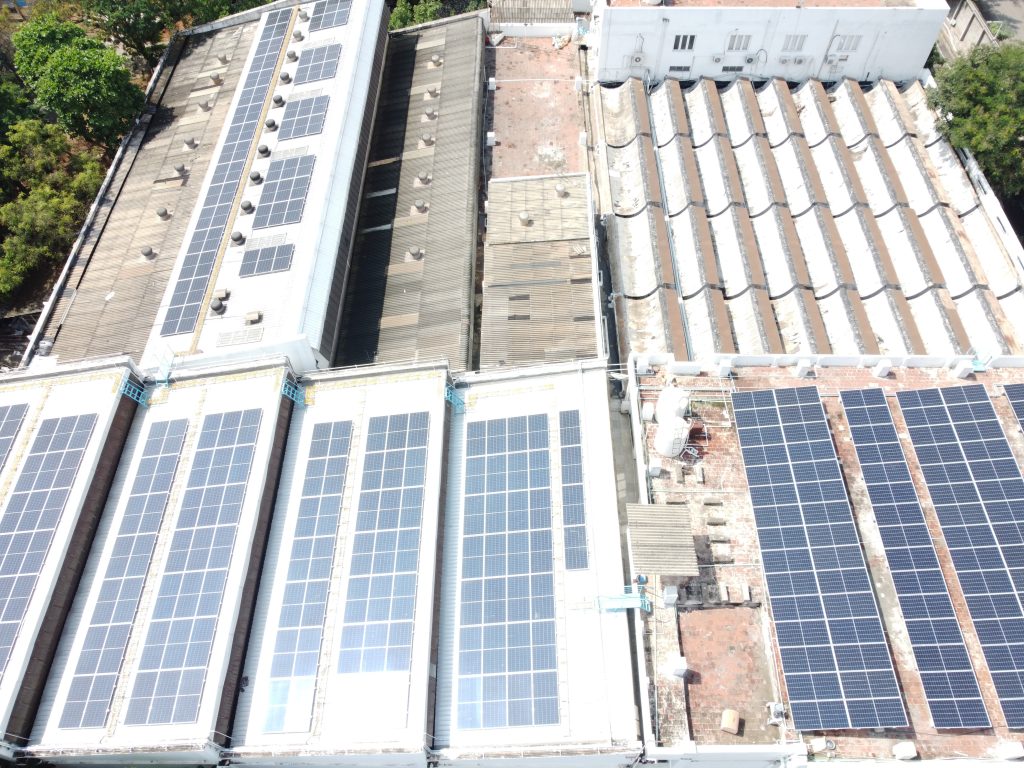
How Battery Storage Solves the Solar Panel Night-Time Challenge
Battery storage has emerged as a game-changing solution when discussing do solar panels work at night. The answer lies not in the panels themselves, but in how we store the abundant energy they generate during daylight hours.
What Happens at Night
When the sun sets and solar panels become inactive, your stored energy supply kicks in seamlessly:
- Stored energy powers your home –The battery automatically switches on, providing electricity just as if the panels were still generating power
- Grid dependence dramatically reduces –You rely far less on utility companies, giving you greater energy independence
- Electricity bills decrease substantially –By using your own stored energy instead of purchasing expensive grid power during peak evening hours, monthly costs drop significantly
- Backup power remains available –During grid outages, your battery system continues operating, unlike grid-tied solar systems without storage
Beyond Basic Night-Time Power
Modern battery storage systems offer advantages that extend well beyond simply powering your home after dark:
- Peak Shaving Benefits:Utilities often charge premium rates during evening hours when demand is highest. Battery storage allows you to avoid these expensive peak rates entirely by using your stored solar energy instead.
- Energy Security:With increasingly frequent grid disruptions due to extreme weather and aging infrastructure, batteries provide peace of mind and continuous power supply regardless of external circumstances.
- Maximized Solar Investment: Without storage, excess solar energy generated during midday either goes unused or is sold back to utilities at low rates. Batteries ensure you capture 100% of the value from every ray of sunshine.
- Smart Energy Management:Advanced battery systems learn your consumption patterns and optimize charging and discharging cycles automatically, ensuring maximum efficiency and cost savings.
Why Choose 4E Renew for Your Solar System?
If you want reliable power even when solar panels don’t work at night, 4E Renew provides complete solar solutions designed for real household needs.
What 4E Renew Offers:
- Professional solar panel installation
- Battery and hybrid solar systems
- Honest guidance and system design
- Long-term support and maintenance
Planning to install solar panels for your home?
Don’t worry about solar panels at night time—Let 4E Renew design the right solution for you. Contact 4E Renew today to get expert advice on solar systems that deliver power day and night.
4E Renew – Smart solar solutions for uninterrupted energy.
